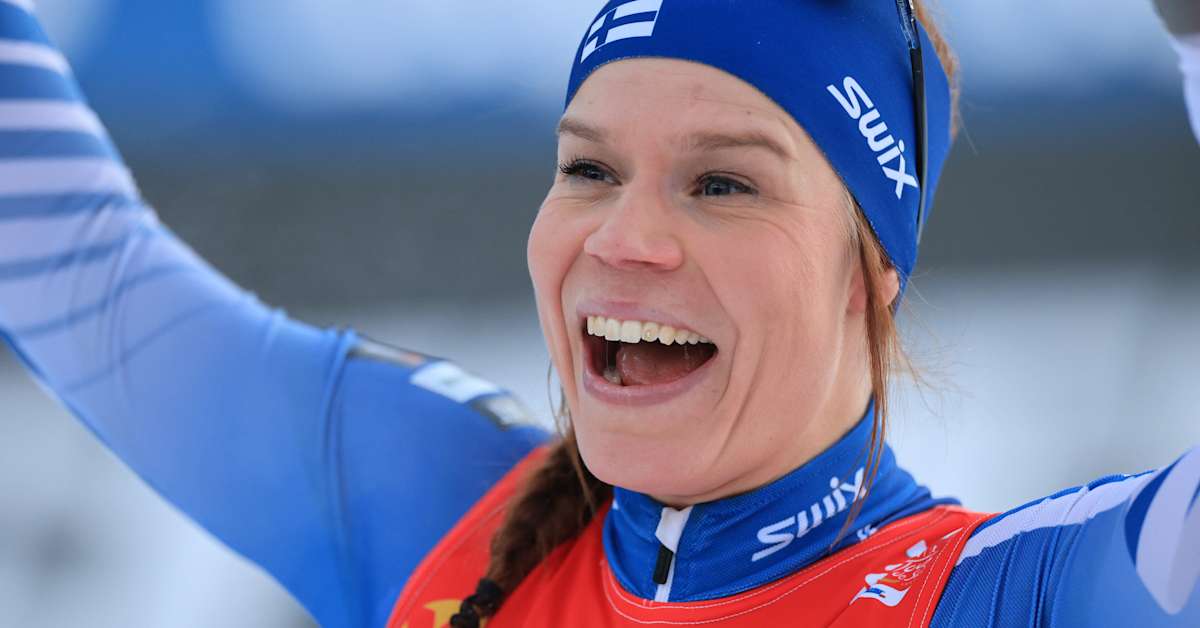
Reijo Jylhä dissected Jasmi Joensuu’s win — Johanna Matintalo broke down in tears: “So frustrating…”
Originally published in Yle on January 03, 2026
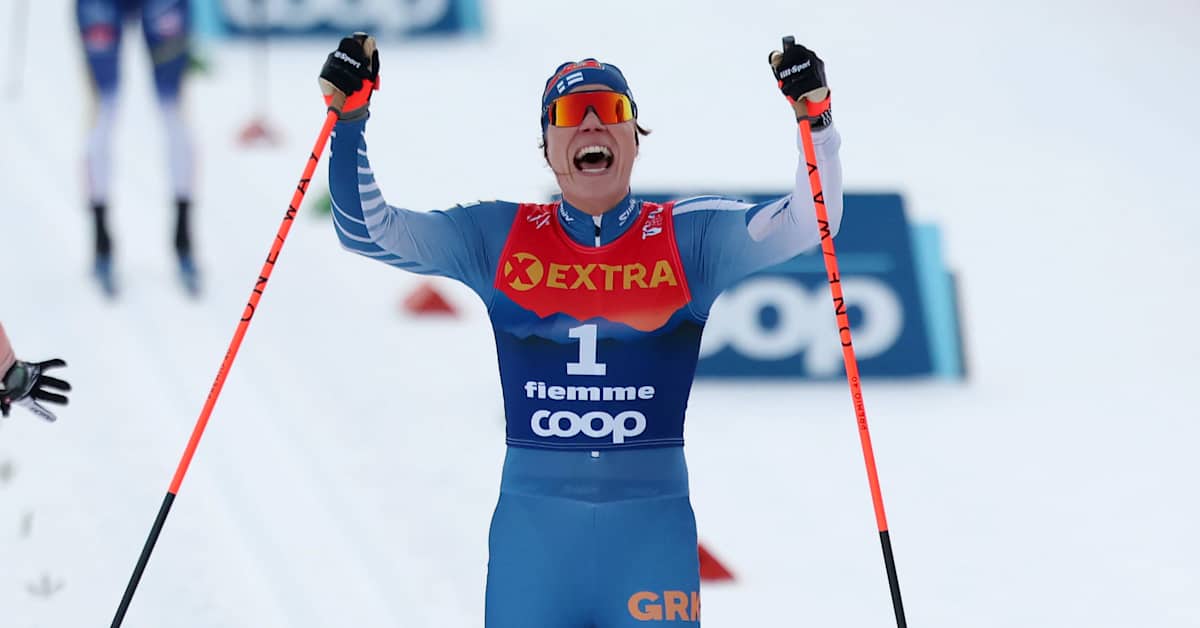
Jasmi Joensuu took her first individual World Cup victory on Saturday in Val di Fiemme. Johanna Matintalo was fifth, Joni Mäki seventh and Jasmin Kähärä tenth. All posted season-best results, although many top names have already withdrawn from the Tour.
The same course hosts the classic sprint distance at the Milan–Cortina Olympics in February. After the great day, women’s national team coach Reijo Jylhä’s thoughts turned also to ski service.
“We had a discussion with the service team before the heats. Service said that if the coaching had done as good a job as service, we’d be completely dominant. Maybe I need to have a conversation about that with the coaches,” Jylhä quipped.
Joensuu also praised the whole team, thanked the service crew and admitted she had skied with skis prepared two days earlier in the cold.
Clear tactics
According to Jylhä, Joensuu’s dominant display was the result of a clear tactic. The controversial sprint track has been modified for the Olympics: the Zorzi climb at the end no longer goes straight into the downhill but now includes a flat work section in between. Joensuu had said after warm‑up that the course felt very long and that the final climb and the run‑in to the finish make up almost half the distance.
“Jasmi saved energy and skied as easily as possible until the final climb, and then she came as hard as she could at the end,” Jylhä recapped.
The last time a Finn won an individual World Cup sprint was in 2013, when Mona‑Liisa Nousiainen (née Malvalehto) won in Liberec.
“Some headlines have been saying Finnish skiing has collapsed, but it’s a pretty good rise from a collapsed state to take a World Cup win and a fifth place,” Jylhä said. “It matters — above all it matters for Jasmi herself, she’s been chasing that win for a long time.”
Jylhä concluded that the changes made to the course mean the final downhill is not as decisive for women as it used to be. The new 10–20 second flat work section after the final climb produced notable gaps.
“Looking towards the Olympics the athletes’ own goals still look achievable. This doesn’t weaken that picture,” he summarised.
Joensuu described the day as a breakthrough. She said getting into finals had been a problem this season but not endurance. The heats had been ridden at a fairly leisurely pace, she said, which set up the final climb well for her finishing speed.
“I’ve known this is a good course for me. There are many elements I like. Someone said I have a distance sprint kick. Sprinters need to be a bit tired for me to win in a sprint finish,” Joensuu said. About the Olympics she added she’d go there with humility — many things can change on a different day and in different conditions.
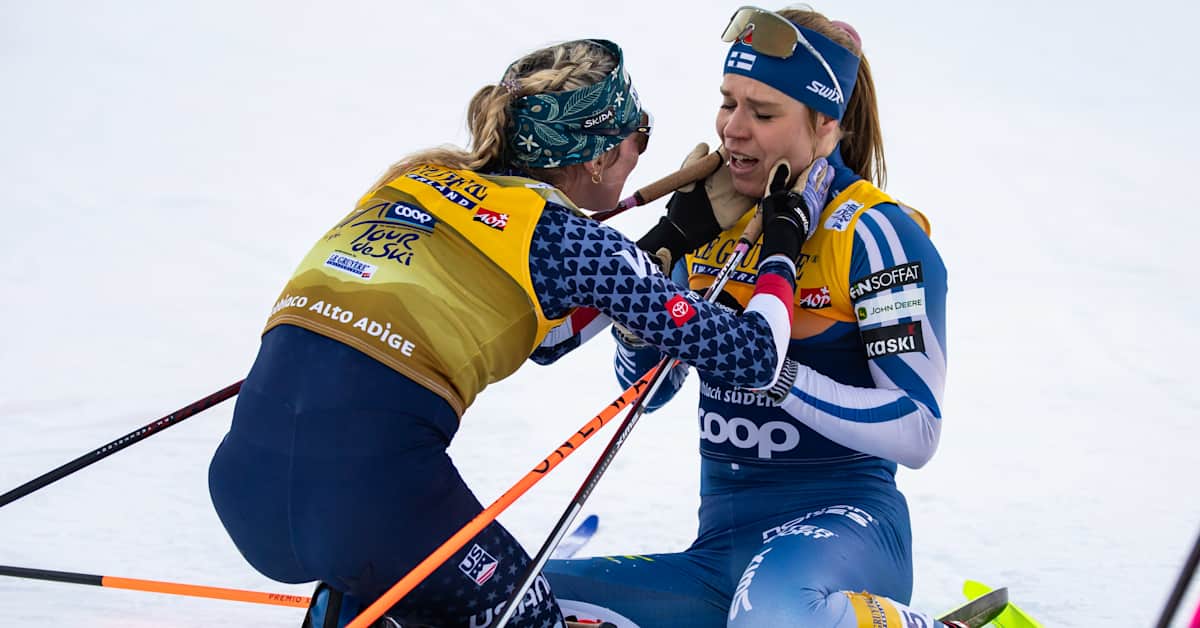
Johanna Matintalo in tears
The other Finnish finalist, Johanna Matintalo, arrived for her interview in tears.
“It was a really tough day from start to finish. Qualifying was okay — I was sixth — but I had huge grip problems. We tried to fix them for the heats. I tested a ski before the quarterfinal and it still wasn’t grippy enough,” Matintalo said, explaining her emotional outburst.
She had asked for more grip testing but the skis couldn’t be re‑tested in time.
“I just wanted a ski that held today, but everyone watching the races could see that nothing held in any heat,” she said.
Matintalo said the problems with her equipment were insurmountable, even though Finland’s service overall had done a good job, as Joensuu’s win showed. The frustration was immense because she had battled all day yet the result was poor.
Despite her disappointment, Matintalo rose to fifth in the Tour de Ski overall standings and said she had come to the Tour aiming for strong individual races rather than the overall classification. Her consistent form has been a positive, but she felt she’d not produced any peak races yet.
In conclusion Matintalo acknowledged that the track changes suit her and that they seemed to work for the women’s competition — differences appeared before the final downhill, she said. But at the moment her feelings were raw and she couldn’t give a deeper analysis of the course or Olympic prospects.
The Tour de Ski concludes Sunday with the 10 km freestyle races. (Men’s race live on TV2 and Yle Areena at 12:25, women’s at 16:25.)
See Also
Jasmi Joensuu stunned by dominant win — laughed at her feelings as Tour de Ski peaked
January 03, 2026 / Yle
Jasmi Joensuu has a chance today at a rare Finnish feat on the Tour de Ski
January 04, 2026 / Yle
Jasmi Joensuu earns rare podium finish for Finland in Tour de Ski
December 28, 2024 / Yle