
Why are women still excluded from Nordic combined at the 2026 Olympics?
Originally published in L'Équipe on February 11, 2026
The Nordic combined has been on the Winter Olympic programme since the first Games in 1924, yet it remains the only Olympic winter sport with exclusively male events. Although a women's international circuit has existed since 2016, and female athletes now compete at a high level in both ski jumping and cross‑country skiing, no senior Olympic events for women have been added — neither in Beijing 2022 nor in Milan‑Cortina 2026.
Annika Malacinski, 24, one of the top ten women in the world in Nordic combined, posted on Instagram and TikTok after learning her brother had been selected for the Olympics while she cannot compete there simply because she is female. She and other female competitors point out that they train and travel just as hard as men, yet they face less competition, fewer sponsors, poorer funding and less media coverage. That lack of Olympic prospects feeds a vicious circle: without Olympic places it is harder to attract sponsors and athletes, and without a deeper field and audience the IOC is reluctant to add events.
The article notes there is no physical or technical reason for women to be excluded: women already race the same distances in cross‑country skiing at the Olympics, and women's ski jumping has been an Olympic sport since 2014. Women’s Nordic combined only reached the international FIS competition level in 2016 and was included at the 2020 Winter Youth Olympics in Lausanne, but that step has not yet led to senior Olympic inclusion.
More fundamentally, Nordic combined as a whole is under scrutiny. The IOC has repeatedly flagged the discipline for having a limited number of competitive nations, modest popularity and insufficient TV audiences. For Milan‑Cortina 2026 the men’s events were retained because athletes had long been preparing for these Games, but the IOC has announced a "full evaluation" after 2026 and said a decision on inclusion of men’s and women’s Nordic combined for the 2030 Winter Olympics will depend on measurable positive developments in participation and viewership.
That uncertainty weakens the development of the women's discipline: without a clear Olympic pathway some athletes switch to ski jumping or cross‑country skiing where Olympic spots exist, reducing the talent pool for Nordic combined. French competitor Léna Brocard has also described the difficulty of attracting sponsors when she cannot promise Olympic visibility. The article concludes that unless participation and audiences increase significantly, women — and perhaps the sport as a whole — will struggle to secure a place at future Winter Games.
See Also
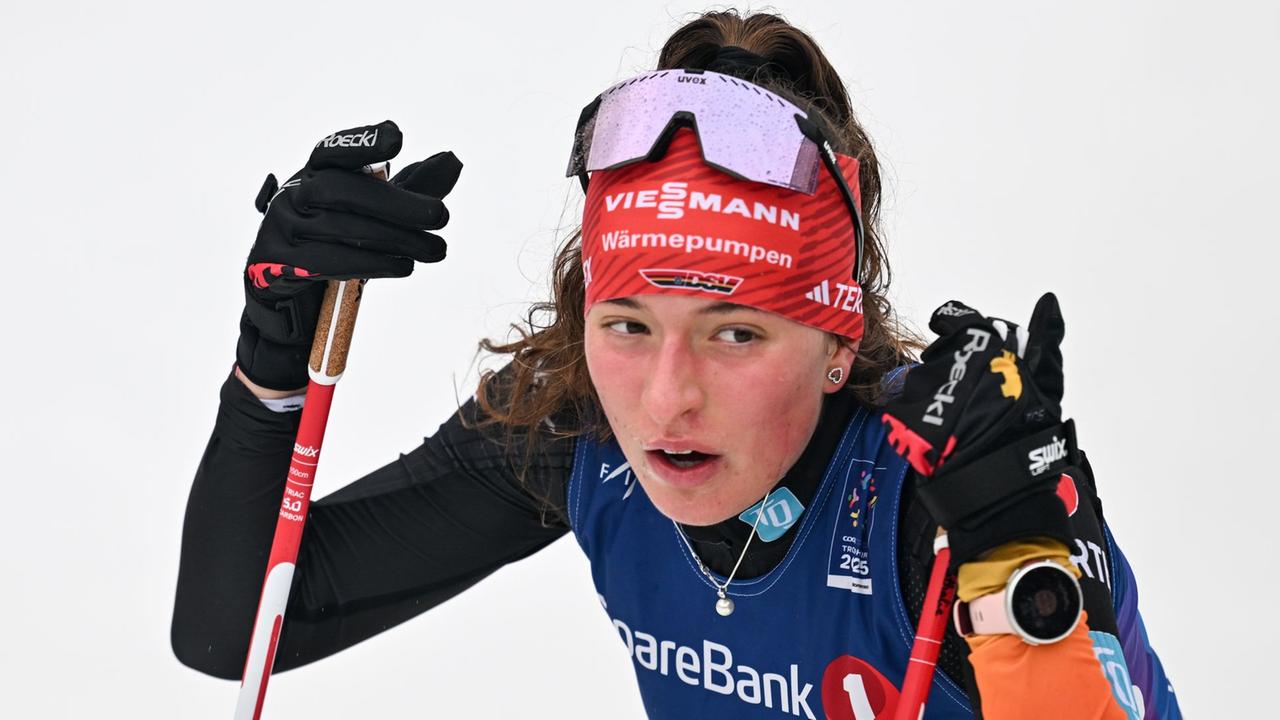
Armbruster: Excluding women from Nordic combined is a “no‑go”
November 10, 2025 / Sportschau (BR/ARD)

Nordic Combined Battles Against Olympic Exclusion for 2030 Games
November 14, 2024 / Sportschau

FIS Confident in Inclusion of Women in Olympic Program
March 01, 2025 / sportschau.de
Kollen move could open Olympic doors: - Very important
November 20, 2024 / Eurosport