“Apparently some put things in their underwear to enlarge the area”: penis enlargement to fly farther in ski jumping — myth or reality?
Originally published in L'Équipe on January 07, 2026
According to the German tabloid Bild, some ski jumpers have reportedly resorted to penis enlargement injections to boost the “flying squirrel” effect of their suits. The aim would be to lower the crotch measurement so the suit’s leg section is shortened and the abdomen/hip area gains surface that increases aerodynamic lift.
It is hard to establish a biomechanical link between penis size and jumping performance. Still, since 2023 athletes undergo precise 3D body scans that determine measurements used to tailor competition suits. Nicolas Dessum, coach of France’s men’s team, stresses the importance of the scan: shorter measured leg length yields a smaller leg cut and more fabric around the pelvis, which can improve lift. Before 2023 measurements were taken with a rod, and, Dessum says, some people “apparently put things in their underwear to enlarge the area.” Scans are done in front of a FIS official and a doctor; athletes wear an FIS‑issued brief put on in front of a medic, and the 3D avatar reveals fine details, making fakery harder.
No jumper has been sanctioned specifically for penile enlargement and Dessum says he’s never seen proof of such a case. He notes, however, that testicles—not penis—would matter more anatomically for lowering the crotch; inflating that area could have an effect. Frédéric Zoz, former French coach and now equipment manager for Japan, describes a decade‑long problem with suit construction: seams and cuts were manipulated to increase buoyant surface under the armpits, hips and thighs. He also criticizes past controllers’ lack of training and says cheating spread team to team.
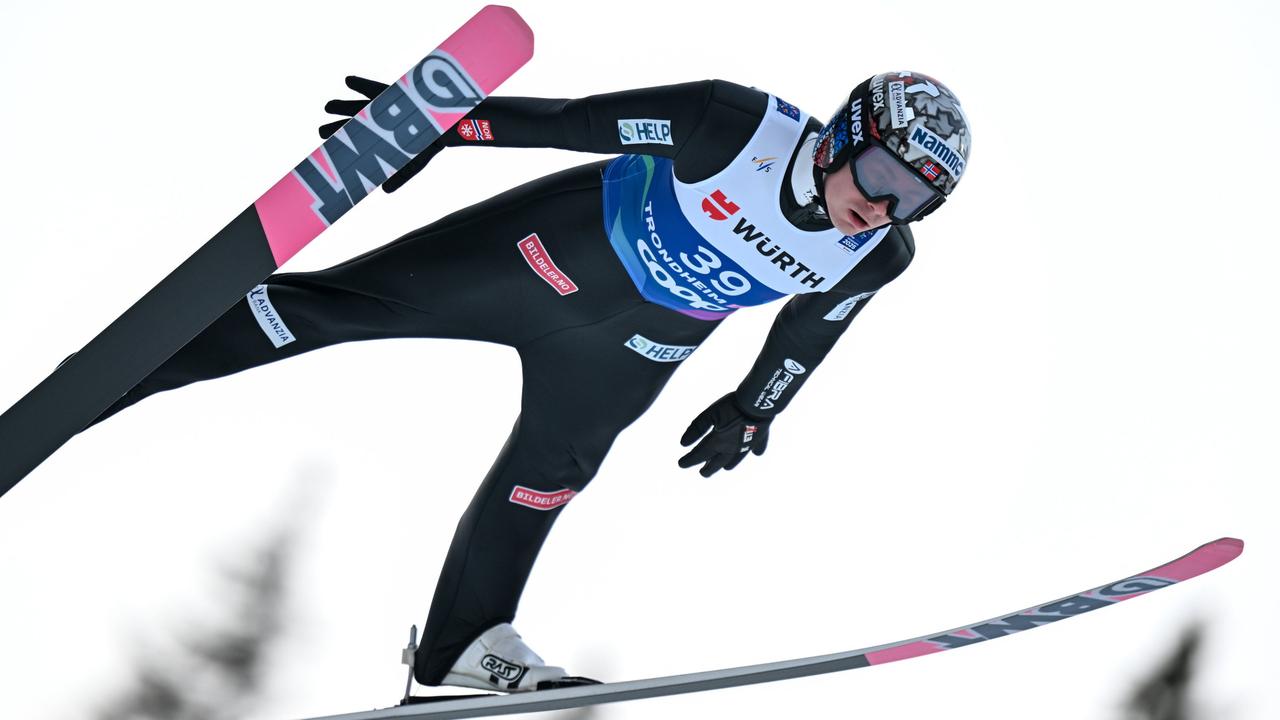
The issue is part of a wider controversy: five women were disqualified at Beijing 2022 for overly large suits, and at the 2025 Trondheim Worlds two jumpers and three Norwegian officials were indicted for illegal equipment manipulation. In response, FIS has tightened checks: Mathias Hafele — long‑time technician and former jumper — was appointed, every new suit now receives an electronic tag, teams may bring only one suit per athlete for homologation, and 3D scanning of athletes is performed before competition. Hafele says homologation will start three days before the first training on the Olympic site in Val di Fiemme, there are more controllers at each event, and penalties for deliberate manipulation include at least six months’ suspension in addition to disqualification.
Specialists and technicians quoted in the article underline that materials and, above all, suit cut determine performance. Caroline Espiau, a pioneer of French ski jumping suitmaking, explains how layers and cuts can be tailored. The article concludes that stricter procedures and better‑trained controllers have already changed the atmosphere on the World Cup circuit: according to Zoz, the opening competitions this season have shown fairer suits and more varied leaders.
(The original article continues; the version here summarizes the main reporting.)
See Also
WADA ready to investigate reported penis‑augmentation in ski jumping
February 06, 2026 / L'Équipe
FIS and Norwegian ski jumping team dismiss rumours of penis‑enlargement scheme
February 06, 2026 / L'Équipe
‘Penis syringe’ trick to gain advantage in ski jumping?
January 05, 2026 / krone.at

Ski jumping: New rules aim to restore credibility after suit-manipulation scandal
November 24, 2025 / Sportschau
Ski jumping: FIS introduces yellow and red cards after suit-manipulation scandal
June 13, 2025 / Sportschau (ARD)
Microchips for Ski Jumping suits - levelling the playing field and reducing waste
March 08, 2024 / FIS Ski