
Why do ski jumpers jump with their skis in a “V”? The story of a revolution
Originally published in L'Équipe on February 02, 2026
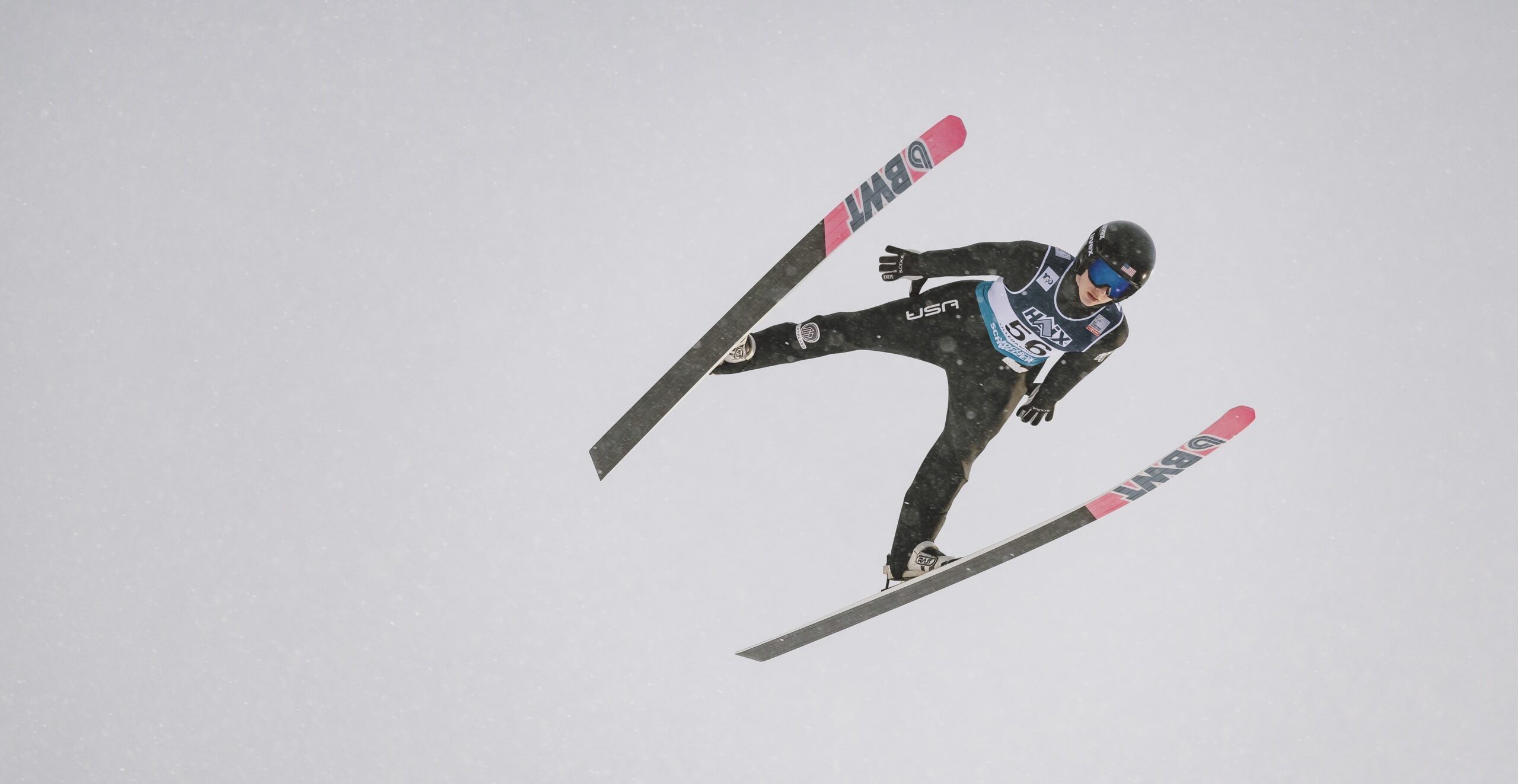
For about 40 years ski jumpers have adopted a “V” position with their skis spread apart to increase the distance of their flight.
In the early days of ski jumping athletes flew with parallel skis, but since the mid‑1980s most jumpers have used the V‑style. The revolution began with the Swede Jan Boklöv in autumn 1985: unable to perform the classical technique well, he widened his skis in the air and gradually opened the tips, and to his surprise he began to fly farther than his rivals. As Nicolas Dessum, coach of the French men's team, recalls, Boklöv was at first heavily penalised on style by the judges, yet he managed to gain enough extra distance to win and convince others. "It's a bit like the Fosbury flop of ski jumping," Dessum says.
Mechanically, the V position increases aerodynamic lift and thus the duration of the glide. Dessum explains that when skis lie under the jumper their surfaces partly overlap, whereas spreading the skis to each side increases the total lifting surface: "it’s no longer the jumper and the skis one on top of the other but the skis plus the jumper." The posture therefore improves lift and flight time.
The V style also helps during the critical biomechanical transition from in‑run to flight. Dessum describes how a jumper leaves the ramp in a flexed take‑off position and must rotate to an extended flight posture; the rotation (roughly from 45° above the ramp to near horizontal) is easier with skis already opened in a V, allowing jumpers to reach the horizontal more quickly and lose less speed. Dessum also notes why the technique arrived relatively late: ski jumpers do far fewer practice jumps than divers—tens or hundreds per year versus hundreds per day in diving—so technical development in ski jumping has historically been slower. He also recalls that in earlier times athletes often climbed back up the hill on foot, limiting repetitions.
The article illustrates the point with historical and contemporary examples and images: Boklöv’s breakthrough in the 1980s, Cene Prevc’s take‑off at Beijing 2022, and references the ongoing relevance of the V style at the Milan‑Cortina 2026 Winter Olympics. It also mentions that athletes sometimes push rules to their limits (for example falsified suits in recent Norwegian team sanctions), but the V‑style itself became universally adopted after its competitive advantage was proven and regulations adapted.
See Also

Embracing Technology in Ski Jumping
/ FIS Ski
Smart suits: The tech innovation transforming ski jumping competition
November 28, 2024 / TownLift, Park City News

New Ski Jumping Rules Not Accepted by Everyone
November 15, 2024 / sportschau.de
Major Changes in Ski Jumping: Tensions Rise in Germany
November 20, 2024 / Przegląd Sportowy